
🗣️ Public Speaking: Overcoming the Fear of Presenting on Zoom
A lot of people feel uneasy when they have to speak in front of others — and doing it online brings its own twists. This article explores why presenting on Zoom can feel especially scary, how common that fear really is in America, and some science‑backed strategies to feel more confident (and maybe even enjoy it 😊).
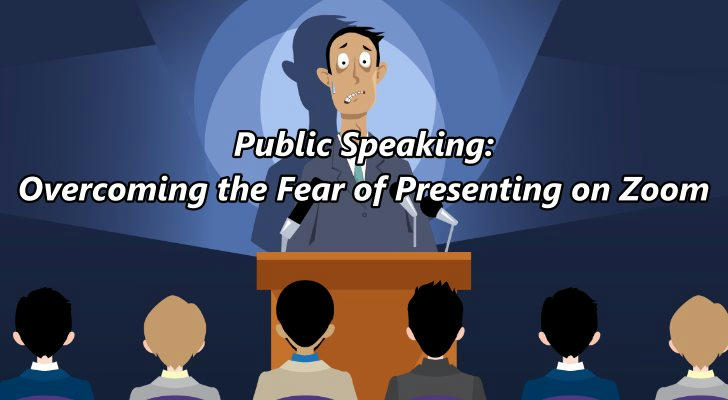
How Big Is This Fear?
Around 28.7% of American adults say they are “afraid” or “very afraid” to speak in public.
Other studies suggest that up to 75% of adults feel some anxiety about public speaking.
Among those with social anxiety disorder, nearly 90% report fear specifically around public speaking.
These figures highlight that this is not a niche issue — a sizable portion of the population deals with glossophobia, the fear of speaking in public.
Why Zoom Feels Different — and Tougher
Putting yourself out there on Zoom triggers layers of anxiety that differ from in-person speaking:
Invisible audience: Not seeing faces or getting real-time feedback can make it feel like talking into a void.
Technical worries: Concern that the mic cuts out, video freezes, or screen sharing fails adds a performance‑pressure dimension.
Self‑monitoring: Seeing your own video feed while speaking can heighten self-criticism or self-consciousness.
Home distractions: Background noise, kids, pets — these can throw off concentration or make one feel less “professional.”
Zoom changes the emotional landscape, pushing some common fears into new, digital shapes.
Physical & Mental Signals: What Anxiety Looks Like
Fear of public speaking doesn’t just live in the mind. Things often felt physically and mentally include:
Racing heart, sweaty palms, dry mouth — classic anxiety symptoms.
Trouble breathing, tight muscles, nausea or trembling.
Negative self-talk: worrying about judgment, making mistakes, or being “exposed” on camera.
Recognizing these signals is a first step — anxiety isn't a sign of failure, it's just energy that needs managing.
Real-World Example: “Unexpected Zoom Anxiety”
Imagine someone named Alex, who is used to talking in small groups at work. When Zoom meetings became the norm, Alex volunteered to give a team update — and suddenly felt freaked out: the screen showed his own face, and the chat window felt like a judgment barometer. He noticed his hands shaking, and his voice felt shaky too.
Here's how Alex made progress:
Set up a practice Zoom call with a friend as an audience — just audio, no video at first.
Used deep-breathing exercises right before starting: inhaling for 4 counts, holding for 2, exhaling for 6.
Turned off “self view” so he didn’t constantly see his own face.
Prepared a short “cheat sheet” with his three main points to stay on track.
Did a dry run including screen share and slide transitions — so technology felt more familiar.
After a few rehearsals, Alex’s anxiety dropped noticeably. The physical jitters stayed, but his focus shifted from fear to delivering his message.

Evidence-Based Ways to Overcome the Fear
Here are some science-backed practices to reduce Zoom presentation anxiety:
Exposure through rehearsal
- Practice in low-stakes settings.
- Repeated exposure reduces fear over time; up to 60–80% of people improve with regular practice or exposure therapy.
Breathing and mindfulness
- Breathing exercises before presenting can lower anxiety by around 30–40%.
Visualization
- Mentally rehearse giving a smooth, confident talk, even picturing positive reactions.
Pre‑performance routines
- Build a consistent ritual: set up tech, practice once, breathe, and then speak — just like athletes use routines to steady nerves.
Peer feedback
- Use friends or colleagues to simulate a Zoom audience. Getting constructive feedback helps build confidence.
Break it into manageable steps
- Start with short presentations or simple updates; gradually increase the length or formality.
Risk vs. Reward: Why It’s Worth Facing the Fear
Facing Zoom-based speaking anxiety is uncomfortable, but there’s upside:
Confidence grows: Each successful presentation reinforces capability.
Communication improves: Clarity and structure tend to improve with practice.
Professional impact: Effective virtual speaking skills can strengthen credibility in remote work environments.
Resilience builds: Managing nerves in a digital world prepares for future high‑stress moments.
Summary & Action Plan
Accept that fear of public speaking is very common — nearly a third of adults feel “afraid” in some studies.
Identify personal anxiety triggers linked to Zoom.
Build a routine: rehearse, breathe, visualize, and test technology.
Use small, realistic goals for building confidence.
Track progress: record a few sessions, note how body and mind feel, and adjust your routine.

Over time, that jittery energy can transform from a barrier into a tool — not just for Zoom, but for speaking confidently wherever the next opportunity arises.