
📝 How to Take Notes That You Will Actually Read Again (Cornell Method)
Many learners struggle with note-taking that feels organized in the moment but becomes unusable later. According to data from the Organisation for Economic Co-operation and Development (OECD), learners who use structured note-taking systems demonstrate stronger long-term retention and improved performance in analytical tasks. Yet most people continue relying on linear or scattered notes that fail to support review, comprehension, and application.
The Cornell Method remains one of the most researched and effective frameworks for transforming raw information into meaningful knowledge. This article explains why traditional notes often fail, how the Cornell structure boosts retention, and what specific skills make the method genuinely effective.
Why Traditional Note-Taking Often Fails
- Notes Become a Transcript Instead of a Learning Tool
Most learners write down information exactly as they hear it, creating dense blocks of text. Cognitive load studies from major universities show that excessive transcription reduces understanding, making it difficult to revisit the material.
- Key Ideas Are Buried in Clutter
Without a system for distinguishing main ideas from supporting details, notes become overwhelming. Learners later struggle to recall the significance of what they wrote.
- No Built-In Review Process
Traditional notes rarely include space for reflection, questions, or summaries. Without review, the brain forgets most new information within days—a phenomenon supported by research related to the "forgetting curve."
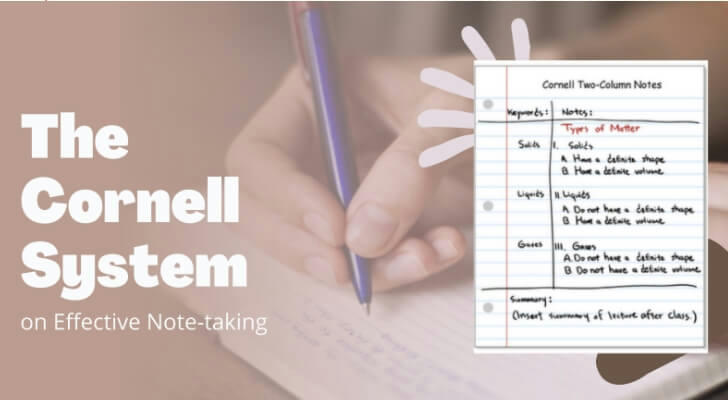
What Makes the Cornell Method Effective?
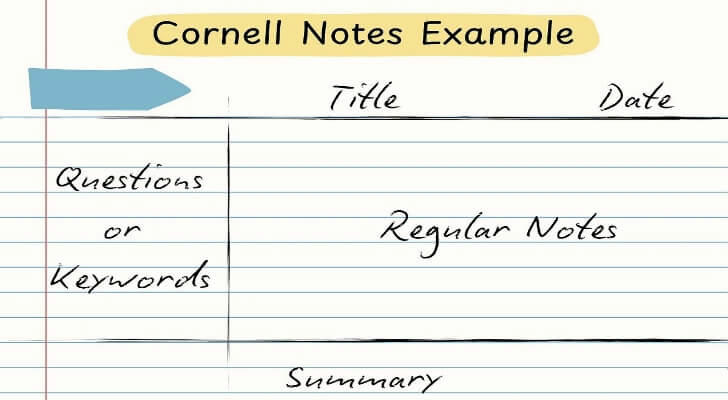
The Cornell Method uses a three-part layout designed to promote active learning, structured review, and deeper comprehension. Its effectiveness lies in how it mirrors the brain’s natural learning processes.
- The Note Column: Structured Information Capture
This is the largest section, used for recording key concepts during lectures, meetings, or reading.
Why It Works
Forces focus on main ideas rather than verbatim transcription
Encourages organized structure through spacing, bullets, or short phrases
Reduces cognitive overload by separating ideas visually
Studies in educational psychology show that notes written in short, concept-focused phrases improve recall more than full-sentence transcription.
- The Cue Column: Prompts for Memory and Understanding
The left-hand column is reserved for questions, keywords, and prompts that help you make sense of what you wrote.
How to Use It
Add questions that test understanding
Write keywords to trigger memory
Note connections to previous lessons or real-life examples
Why It Matters
According to cognitive science research, retrieval practice—actively recalling information through prompts—strengthens memory pathways and increases long-term retention. The cue column transforms passive notes into active study tools.
- The Summary Section: Condensing Knowledge Into Essential Insights
At the bottom of the page, the summary forces you to restate key concepts in your own words.
Benefits
Encourages reflection
Reinforces learning through synthesis
Creates a quick reference for future review
Learners who summarize immediately after note-taking retain more information and show stronger conceptual understanding, according to findings from the National Training Laboratories’ learning research.
Essential Skills You Need to Apply the Method Correctly
- Active Listening or Reading
Engage with the material rather than attempting to record everything. Listen for structure, relationships, and transitions.
- Organizational Awareness
Break topics into main points, subpoints, and examples. Clean structure leads to cleaner thinking.
- Post-Session Reflection
The summary section and cue column are only effective when filled out after the session, not during it.
- Consistent Review Habits
Periodic review—especially within the first 24 hours—strengthens memory and increases exam or workplace performance, according to multiple education studies.
Who Benefits Most from the Cornell Method?
This structured approach is ideal for: ✔ University students ✔ Adult learners in professional development programs ✔ Individuals preparing for certifications ✔ Anyone who needs a reliable, repeatable learning system ✔ Midlife learners who value clarity and organization
Adults entering new learning environments often excel with Cornell notes because the system adds order and predictability.

How to Start Using the Cornell Method Today
Here are practical steps to implement immediately:
Divide your page into the standard three sections
Capture concepts—not full sentences—in the note column
Add cue questions after the session
Write a short summary while the material is still fresh
Review within 24 hours to reinforce retention
Use the summary section as a quick refresher before exams or meetings
Small, intentional habits transform scattered pages into a personal knowledge database.
Final Thoughts
The Cornell Method is not simply a formatting trick—it is a thinking tool. Research across Europe and North America consistently shows that structured note-taking improves understanding, retention, and information retrieval. When learners shift from passive writing to active processing, their notes become more than records; they become guides for deep comprehension.
With a clear structure and thoughtful review process, the Cornell Method turns every page of notes into material you will actually want to read again—because it finally makes the information meaningful, organized, and usable.