
🌍The Truth About Immersion Courses vs. Classroom Learning
When the goal is to master a new language, learners often face a pivotal choice: Should they dive headfirst into an immersive environment 🏊, or opt for the structured predictability of a traditional classroom 🏫? This question is central to the American pursuit of multilingualism, reflecting diverse learning needs and modern educational realities.

🧠 The Foundations: Defining the Models
Understanding the core differences is key. Neither method is inherently superior; rather, they serve different purposes based on a learner's capacity and timeline.
- Immersion Courses:
- Focus on real-world, spontaneous communication 🗣️.
- Language is the sole medium of instruction and daily interaction.
- Emphasis on fluency and cultural adaptation over strict grammatical precision.
- Classroom Learning:
- Provides a systematic, rule-based approach 📝.
- Structured curriculum introduces grammar and vocabulary incrementally.
- Offers immediate access to native-speaking instructors for clarification and drills.
📊 Analyzing Effectiveness: Data from Reputable Sources
Data from the Defense Language Institute (DLI) provides a valuable, high-stakes metric for U.S. language training. The DLI categorizes languages by difficulty for English speakers, showing the required study hours to reach "General Professional Proficiency" (equivalent to S-3/R-3).
| Language Category | Examples | Classroom Hours (Approx.) | Implied Immersion Speed (Relative) |
|---|---|---|---|
| Category I | Spanish, French | 600 - 750 | Faster 🚀 |
| Category III | Russian, Hebrew | 1,100 | Moderate ⏱️ |
| Category IV | Arabic, Chinese | 2,200 | Slower/More Intensive 🛑 |
- Interpretation: While classroom hours are measurable, the speed in an immersion context is highly individualized. For Category IV languages, the sheer volume of material suggests that structured classroom time provides an essential scaffolding that pure immersion might lack initially.
💡 Immersion's Edge: The Cognitive Leap
Immersion's main benefit lies in how it forces the brain to process language as a tool for survival and daily function, not just an academic subject.
- Psychological Benefits:
- Reduces the reliance on mental translation, encouraging thinking in the target language.
- Significantly boosts listening comprehension 👂 due to continuous exposure to varied accents and speeds.
- Builds confidence in speaking, often overcoming the fear of making mistakes.

🧑🏫 Classroom's Strength: Precision and Scaffolding
The classroom environment excels at building a solid, theoretical foundation that is crucial for advanced language use, especially in professional or academic settings.
- Key Advantages:
- Explicit grammar instruction addresses complex syntax often missed in real-time conversation.
- Provides structured feedback 📝, correcting errors before they become ingrained habits.
- Access to learning materials tailored to specific proficiency levels, ensuring an optimal challenge.
🔎 Critical Analysis: The American Context
In the U.S., a true immersion experience often requires travel abroad ✈️, which presents logistical and financial hurdles. American college programs increasingly offer hybrid models—a structured semester followed by a short, guided immersion trip.
Fact Check: Pure, unguided immersion can lead to "fossilization," where errors become permanent habits if not corrected early by a qualified instructor.
- Verification Case: Consider a learner of Japanese. In a classroom, the distinction between formal and informal speech (e.g., desu vs. da) is taught explicitly. In unguided immersion, a beginner might accidentally use overly casual speech in a formal setting, learning the error only through social discomfort. This is where classroom precision prevents real-world blunders.
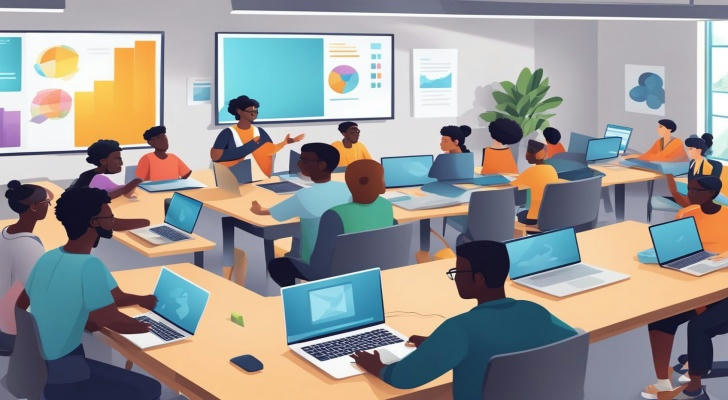
⚖️ The Takeaway: Blending the Best
Ultimately, the most effective path often involves a combination of both models. Learners who begin with a classroom foundation and then transition to a period of intense, goal-oriented immersion tend to see the fastest, most durable progress.
- Recommended Action Flow:
- Start with 100-200 hours of structured grammar and core vocabulary in a classroom setting.
- Transition to a period (e.g., 3-6 weeks) of guided immersion for intense listening and speaking practice.
- Maintain learning post-immersion with regular conversation partners to solidify gains and prevent backsliding.
- Utilize authentic media (movies, podcasts) to bridge the gap between textbook language and native speech.
The choice is less about choosing one over the other, and more about strategically sequencing the two methods for maximum efficacy 👍.